
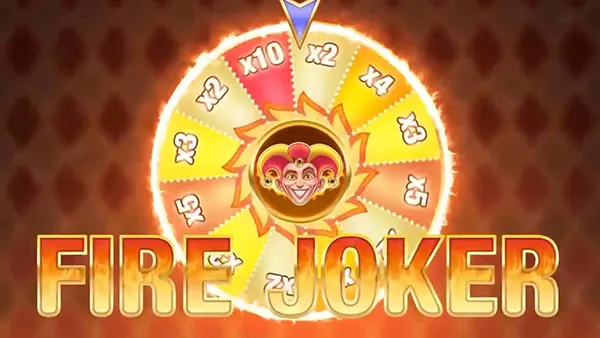
Fire Joker — a classic Play’n GO slot review with 2026 facts
Fire Joker is Play’n GO’s modern take on a traditional fruit slot: three reels, a small set of fixed paylines, and a ruleset that stays readable even when the pace picks up. The game first appeared in mid-2016 and it is still widely distributed because it offers short, punchy sessions without the long feature cycles you see in many modern video slots.
Game setup, paylines, symbols, and how wins are formed
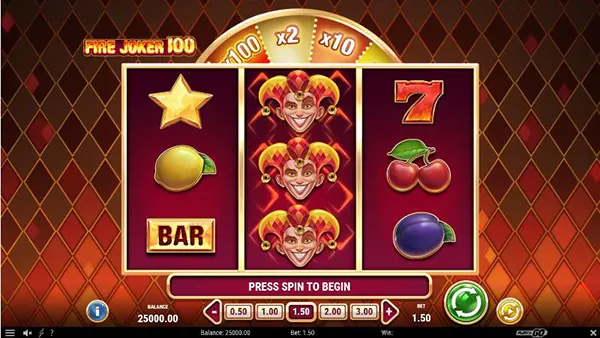
Fire Joker uses a 3×3 reel layout with five fixed paylines. That sounds minimal, but it changes the feel of variance: instead of waiting for large multi-line hits, most outcomes hinge on whether you land three matching symbols on one of the five lines. Because the grid is small, each spin resolves quickly, and it is easy to track what is happening without relying on heavy animation or complex counters.
The symbol set is deliberately classic: fruit for low-to-mid payouts, plus higher icons such as BAR, a star, and sevens. The Fire Joker symbol acts as the Wild, meaning it can substitute for standard symbols to complete a line win. In practical terms, the Wild does two jobs: it improves hit quality during normal play and it also plays a key role in the main re-spin mechanic.
One point worth making for 2026: Fire Joker exists in multiple RTP configurations. Many casinos promote the 96.15% setting, but operators can offer lower RTP versions depending on jurisdiction and commercial choice. Before you commit real money, open the in-game help/info and check the displayed RTP value for the exact version you are playing, because that single number can change the long-run cost of play.
RTP, volatility, stake range, and what “800x max win” really means
Fire Joker is commonly described as medium volatility, which matches the way it pays: you can see regular small wins and occasional stronger hits, but the biggest outcomes are tied to specific high-value moments rather than frequent bonus rounds. The often-quoted RTP for the top configuration is 96.15%, and the widely stated maximum win is up to 800× the stake, which is high enough to matter but not so high that you should expect it to appear in normal sessions.
The stake range depends on the casino client, but many listings show spins from about 0.05 up to around 100 per spin (currency varies by country and operator). If you are adjusting stakes, do it with a simple rule: increase only when you can tolerate the same session length at the higher bet. On a compact five-line game, bankroll can disappear faster than players expect because each spin is quick and there is less “downtime” compared to feature-heavy slots.
About that 800× figure: it is a ceiling, not a target. Even if the game can theoretically deliver it, the practical takeaway is risk management—set a session limit, avoid chasing losses, and treat unusually strong wins as an outlier rather than proof of a “hot” game. Fire Joker is RNG-based, so each spin is independent; patterns you notice in short play are usually noise.
Respin of Fire: the feature that defines Fire Joker
Fire Joker’s signature mechanic is Respin of Fire. It triggers when stacked symbols appear on two reels but you do not have a line win because the third reel blocks it. Instead of ending the spin, the game holds the stacked reels and awards a free re-spin on the remaining reel, giving you another chance to complete the combination.
On a 3×3 grid, this matters more than it first appears. The feature increases the number of “near-miss but still live” outcomes, which can improve engagement while also changing the distribution of returns: you get fewer dead ends in situations where the reels already show a strong pattern. It is a straightforward mechanic, but it is also the core reason Fire Joker feels more dynamic than a basic fruit slot with no feature logic.
From a practical perspective, Respin of Fire is most valuable when it locks high-paying symbols or when it sets up a situation where the Wild can complete multiple paylines. It does not guarantee a win—sometimes the third reel misses again—but it meaningfully increases the number of second-chance spins compared with a no-feature classic slot.
How to read re-spin situations without falling for “near-miss” bias
The feature is designed to trigger on visually strong setups: two reels show matching stacks, so your brain naturally expects the third reel to cooperate. That expectation is psychological, not mathematical. The re-spin is still governed by RNG and the reel strips for that version of the game, so treat it as an extra attempt, not a promise.
A sensible way to approach it is to evaluate re-spins as value-neutral entertainment. If your session plan was 200 spins at a given stake, keep it at 200 spins. Do not extend the session just because you saw several re-spin triggers in a row; streaks can occur in either direction, and extending play is how many players drift into poor decisions.
If you want one actionable habit: after any re-spin sequence—win or lose—pause for a second and check whether you are still playing your original plan. Fire Joker’s pace makes it easy to click through spins quickly, and that speed is exactly why pre-set limits and short breaks are useful.
Wheel of Multipliers, full-screen wins, and what to check before real play
The second defining element is the Wheel of Multipliers. In Fire Joker, a full-screen win (all nine positions showing the same symbol) triggers the wheel, which applies a multiplier to the win. Reported multipliers typically range from ×2 up to ×10, and when combined with a high-value full screen, this is how the game reaches its most memorable outcomes.
Full-screen wins are inherently rare on a 3×3 layout, which is why the wheel feels impactful when it arrives. The key is understanding that it is a “spike” mechanic: you may play a long time without seeing it, then suddenly land a result that changes the whole session. That is enjoyable for many players, but it also means you should not build expectations around frequent wheel triggers.
Before you play for money in 2026, confirm three things: the RTP setting in the info menu, the stake limits for your chosen currency, and any local responsible gambling tools offered by the casino (deposit limits, loss limits, time-outs, and self-exclusion). Fire Joker is a simple game, but responsible controls matter most on fast-play titles where it is easy to overspend without noticing.
Quick responsible-play checklist for a fast classic slot
Set a time limit as well as a money limit. A money cap alone is not always enough, because quick spins can lead to rapid decisions. A short timer—20 to 30 minutes—often does more to prevent impulsive play than any complex strategy.
Choose a stake that lets you absorb variance without emotional pressure. If a normal losing run would make you increase the bet “to get it back,” the stake is too high for your bankroll. Fire Joker’s main risks are not hidden rules; they are speed, repetition, and the temptation to chase.
Finally, remember that slots are entertainment, not a way to generate reliable income. If gambling stops being enjoyable, step away and use support options available in your jurisdiction. Many regulated markets provide self-exclusion registers and specialist help lines, and casinos operating under strict regulators usually link to them directly in their responsible gambling sections.
-
news
 Tiger Shrine — New Asian Slot by Relax Gaming with Buffalo-Style Me...
Tiger Shrine by Relax Gaming reflects a growing trend in modern slot design where familiar mechanics …
-
news
 Golden Avalon Hold & Win (BGaming): Detailed Analysis of the H...
Golden Avalon Hold & Win is a video slot released by BGaming that combines classic fantasy …
-
news
 Lucky Neko (Pragmatic Play): A Realistic Breakdown of Respins and S...
Lucky Neko by Pragmatic Play has remained one of the studio’s most recognisable Asian-themed releases since …