

Lucky Lu by BGaming: Can a Simple Chinese Slot Without Complex Mechanics Still Deliver?
In recent years, slot development has often leaned towards complexity: cascading reels, expanding systems, layered bonuses and hybrid mechanics. Against this backdrop, Lucky Lu by BGaming stands out for taking a different path. This game builds its identity around simplicity, familiar visual themes, and a restrained feature set. The key question is whether such an approach still works in 2026, when players are used to increasingly sophisticated formats.
Core Design Approach: Simplicity Over Feature Overload
Lucky Lu follows a traditional 5×3 reel structure with a clear payline system, avoiding experimental formats that can confuse players. BGaming deliberately keeps the interface minimal, ensuring that all key information — paylines, symbols, and potential payouts — is easy to read without additional learning. This reflects a design philosophy aimed at accessibility rather than technical novelty.
The Chinese-inspired theme, while familiar, is handled in a restrained way. Symbols such as coins, lucky charms, and cultural motifs are presented without excessive animation or distraction. This creates a calm visual rhythm, which contrasts with many modern slots that rely heavily on dynamic effects and rapid transitions.
From a technical standpoint, the game performs consistently across desktop and mobile devices. Load times are short, and the gameplay remains stable even on mid-range hardware. This matters more than it might seem, as performance reliability often becomes a deciding factor for players who prefer uninterrupted sessions.
RTP, Volatility and Player Expectations
Lucky Lu operates with an RTP that aligns with industry standards for BGaming titles, typically around the mid-96% range depending on configuration. This places it within the expected bracket for modern online slots, offering a balanced return profile rather than aggressive variance.
The volatility is moderate, meaning players can expect a steady rhythm of smaller wins with occasional higher payouts. This approach is often preferred by users who are less interested in high-risk gameplay and more focused on controlled sessions with predictable pacing.
Importantly, the absence of complex mechanics does not mean the absence of structure. The game’s balance between RTP and volatility shows careful calibration, ensuring that simplicity does not translate into randomness or lack of engagement.
Gameplay Mechanics: What Is Included — and What Is Not
Unlike many modern slots, Lucky Lu avoids layered bonus systems. There are no cascading reels, no expanding grids, and no multi-stage bonus rounds. Instead, the game relies on a more traditional feature set, including wild symbols and a straightforward bonus trigger mechanism.
The wild symbols function in a classic substitution role, helping to complete winning combinations without introducing additional modifiers. This keeps gameplay intuitive and removes the need for players to track multiple overlapping effects during a spin.
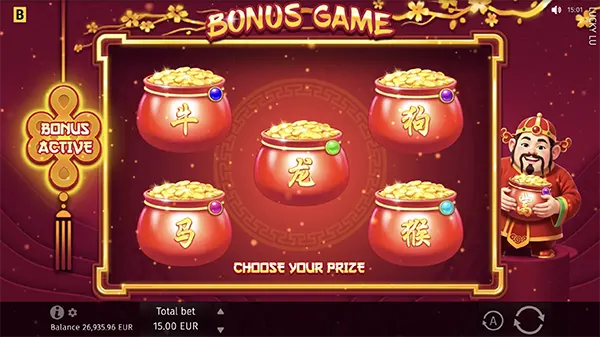
Bonus rounds, when triggered, are simple and direct. Rather than introducing complex mini-games or progressive mechanics, they focus on delivering clear, immediate rewards. This design choice reduces cognitive load and keeps the pace consistent throughout the session.
How Simplicity Affects Engagement
One of the main risks of minimalistic design is reduced long-term engagement. However, Lucky Lu manages this by maintaining a steady gameplay rhythm. The absence of complex features allows players to focus entirely on the core spinning experience, which can feel more controlled and less chaotic.
For certain audiences, particularly those who prefer traditional slots, this approach can be more appealing than feature-heavy alternatives. It creates a sense of familiarity that does not require adaptation or strategy adjustment.
At the same time, players seeking innovation or high-intensity mechanics may find the experience limited. This highlights that the game is not trying to satisfy every segment of the market, but instead focuses on a clearly defined audience.
Position in the 2026 Slot Market
As of 2026, the slot market is divided between high-complexity titles and streamlined formats designed for accessibility. Lucky Lu clearly belongs to the second category. Its design aligns with a broader trend where developers reintroduce simplified mechanics to balance the saturation of feature-heavy games.
BGaming’s strategy appears intentional: rather than competing with high-budget, mechanic-driven titles, the provider offers an alternative for players who value clarity and consistency. This positioning allows the game to remain relevant without relying on constant updates or feature expansions.
Market data shows that a segment of players continues to favour straightforward slots, especially in mobile environments where quick sessions are common. Lucky Lu fits naturally into this usage pattern, offering a predictable and stable experience.
Is a Simple Slot Still a Strong Choice?
The success of a slot like Lucky Lu depends on expectations. For players looking for advanced mechanics, the game may feel limited. However, for those who prioritise ease of use, stable performance, and a familiar structure, it delivers exactly what is needed.
From an industry perspective, the existence of such titles is important. They provide balance within the ecosystem, ensuring that not all games move towards increasing complexity. This diversity helps maintain a broader player base with different preferences.
Ultimately, Lucky Lu demonstrates that simplicity, when executed with precision, remains a viable and relevant design choice. It may not redefine the genre, but it confirms that not every successful slot needs to be built around layered mechanics.
-
news
 Eastern Fury by Pragmatic Play: How Expanding Wilds and Growing Mul...
Eastern Fury is a Pragmatic Play slot released on 27 August 2026, built around a 5×5 …
-
news
 Panda Fortune Rush by BGaming and Playzia: How Cluster Pays, Scatte...
Panda Fortune Rush is a 2026 slot developed by BGaming in collaboration with Playzia and released …
-
news
 Bao Shi Slot Review: Lioras, Gong Free Spins and Chinese Lion Lore
Released by Play’n GO in October 2025, Bao Shi is a five-reel slot set among misty …